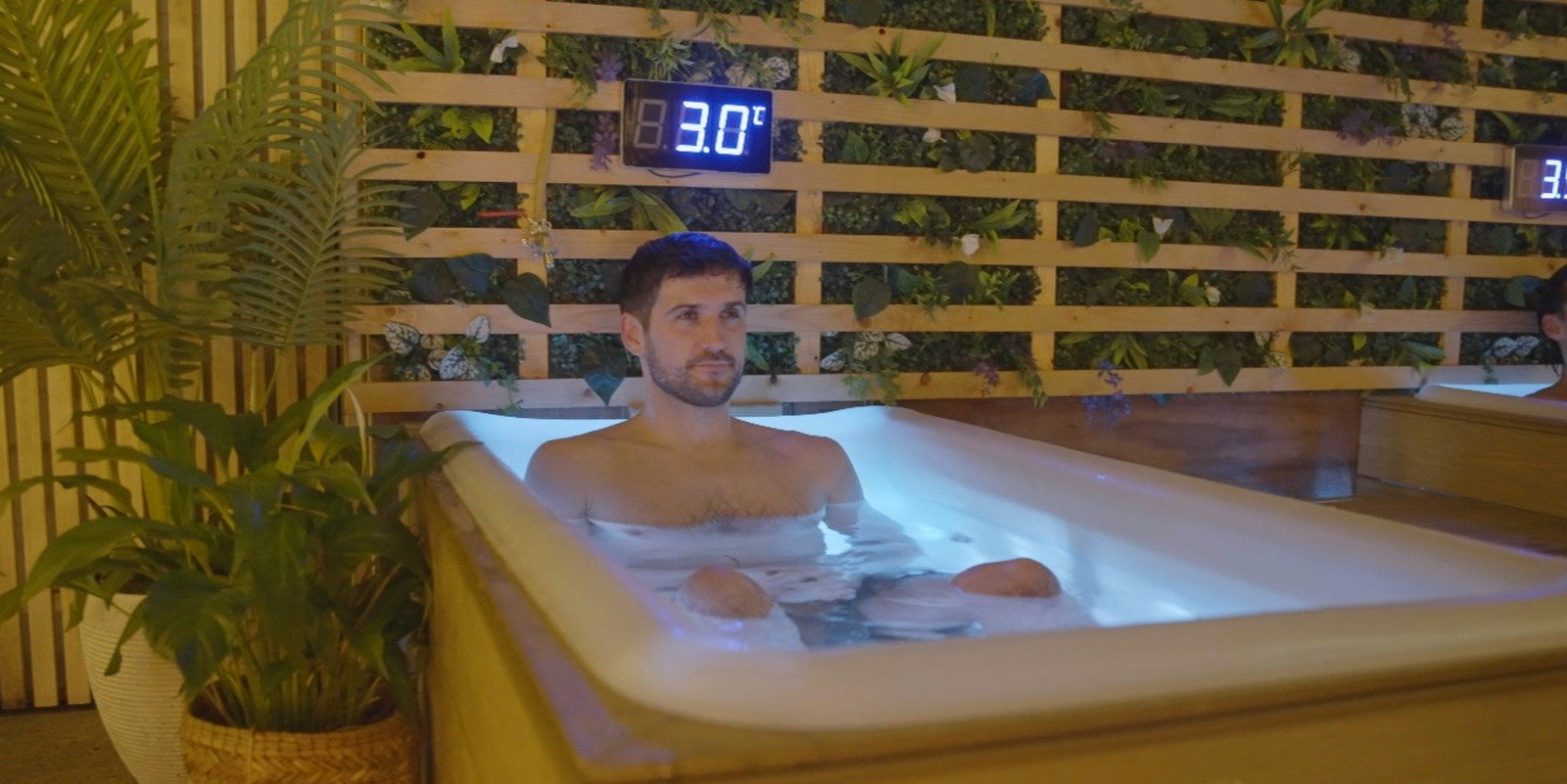
Wim Hof Breathing: A Step-by-Step Guide
Wim Hof — nicknamed "The Iceman" — has climbed Everest in shorts, run a half-marathon barefoot in Arctic ice, and broken 26 world records related to cold exposure. His method is built on three pillars: cold therapy, breathwork, and commitment. The breathing technique is the foundation — and it's something anyone can learn.
What Is the Wim Hof Method?
The Wim Hof breathing technique is a form of controlled hyperventilation followed by breath retention. It works by deliberately manipulating the ratio of oxygen and carbon dioxide in the blood, triggering a cascade of physiological effects — from alkalisation of the blood to activation of the sympathetic nervous system and a significant reduction in the anxiety response to cold.
Practising Wim Hof breathing before entering an ice bath dramatically improves your ability to stay calm, stay in longer, and extract more benefit from the experience.
The Science Behind It
- Alkalises the blood: Rapid breathing reduces CO₂, raising blood pH — creating a state that is simultaneously energising and calming.
- Adrenaline release: Research from Radboud University found that Wim Hof practitioners could voluntarily activate the sympathetic nervous system, releasing adrenaline even without external stressors — previously thought impossible.
- Immune modulation: The same study found that practitioners could influence their immune response, reducing inflammation markers when exposed to bacterial endotoxins.
- Improved cold tolerance: By pre-activating the body's stress response in a controlled way, the cold water's "shock" effect is significantly reduced — making immersion more manageable and more effective.
Step-by-Step: The Wim Hof Breathing Technique
Important safety note: Never practise Wim Hof breathing in water, while driving, or in any situation where you could fall. Always do it lying down or sitting safely. Lightheadedness is normal — fainting is possible during retention phases.
- Step 1 — Get comfortable: Lie on your back or sit upright with your spine straight. Relax your shoulders and jaw. Close your eyes.
- Step 2 — Power breaths (30–40 repetitions): Inhale deeply through the nose or mouth — fill the belly first, then the chest — then let the exhale go passively and immediately, without forcing it out. This is not normal breathing. It should feel powerful, almost pumping. Complete 30–40 repetitions.
- Step 3 — Retention (exhale hold): After the final inhale, exhale fully and stop. Hold your breath here — no air in, no air out. Hold for as long as feels comfortable. 1–2 minutes is typical for beginners. Notice the tingling, the warmth, the deep stillness.
- Step 4 — Recovery breath: When you feel the urge to breathe, take one large inhale and hold it for 15 seconds. Then release. This is one complete round.
- Step 5 — Repeat: Complete 3–4 rounds. With each round, you may find your retention time increases naturally.
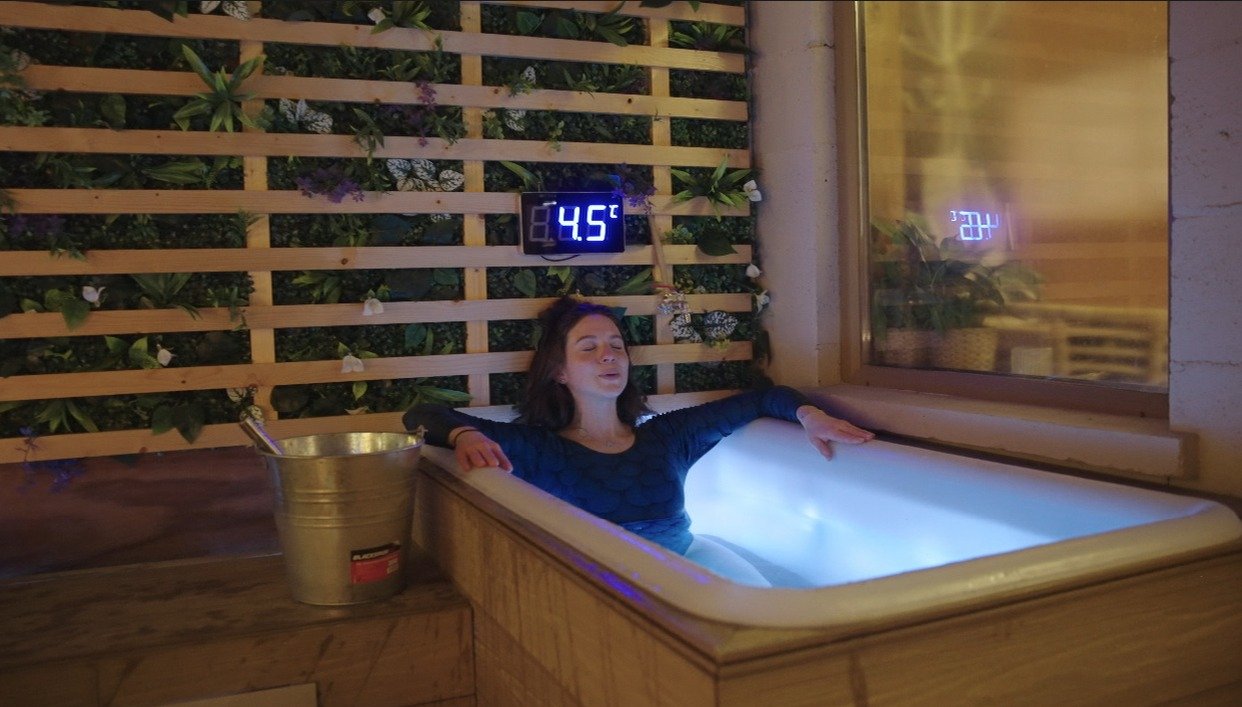
Using Breathwork During the Ice Bath
Once you're in the water, the single most important thing you can do is control your exhale. When cold water hits the body, the instinct is to gasp and take rapid, shallow breaths. This is the "cold shock response" — and it's the biggest barrier to comfortable cold immersion.
Counter it by focusing on a long, slow exhale the moment you enter. Breathe in naturally, then extend the exhale — aim for twice the length of your inhale. Within 60 seconds, your heart rate will slow, your nervous system will shift, and the cold will begin to feel manageable, even pleasant.
Beginner Tips
- Start your breathwork session 10–15 minutes before entering the ice bath
- Don't worry about holding your breath for a specific time — let it feel natural
- You may feel lightheaded, tingly, or warm — this is all normal
- After 2–3 weeks of regular practice, your cold tolerance increases noticeably
- Combine with the sauna for the full contrast therapy experience
Also worth reading
→ The Benefits of Cold Water & Ice Baths → Sauna + Ice Bath Together: The Ultimate Recovery ProtocolPut it into practice
Book a session at Plunge Recovery and experience the full power of breathwork combined with our premium ice baths and sauna in Dún Laoghaire.
Book a Session